Oysters Hawaiʻi started with a wild idea, a pandemic, and a loss that could have ended everything. Instead, Julie Fieman and her sister kept shucking — and built the islands’ only luxury mobile oyster and caviar company into a brand that landed the Super Bowl.
There is no obvious throughline between East Coast oyster bars and Hawaiian hospitality. No reason, on paper, that the two should meet in a mobile shucking cart rolling through a Honolulu event. And yet that’s exactly what Oysters Hawaiʻi is — an improbable concept that became, against considerable odds, the only one of its kind in the islands.
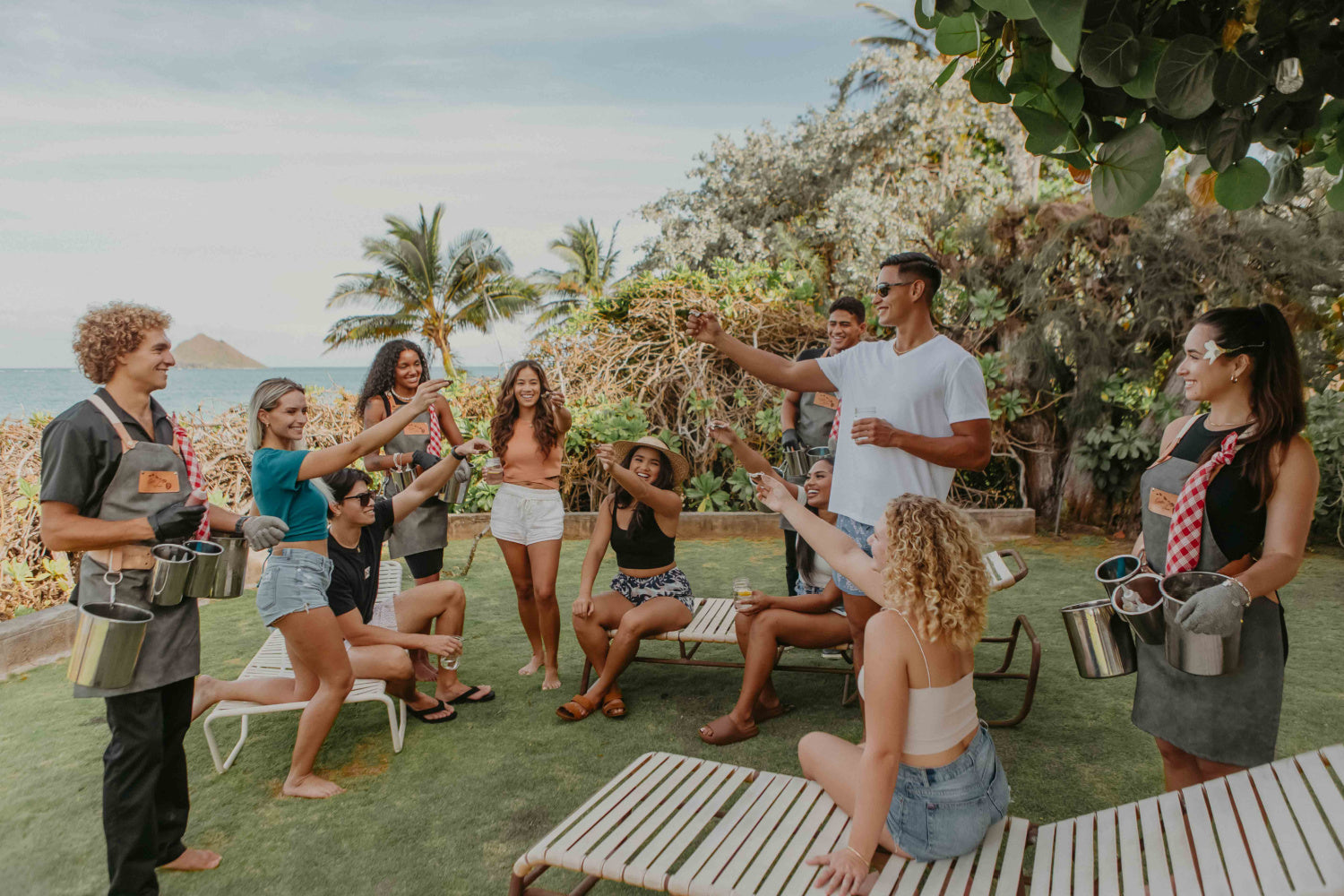
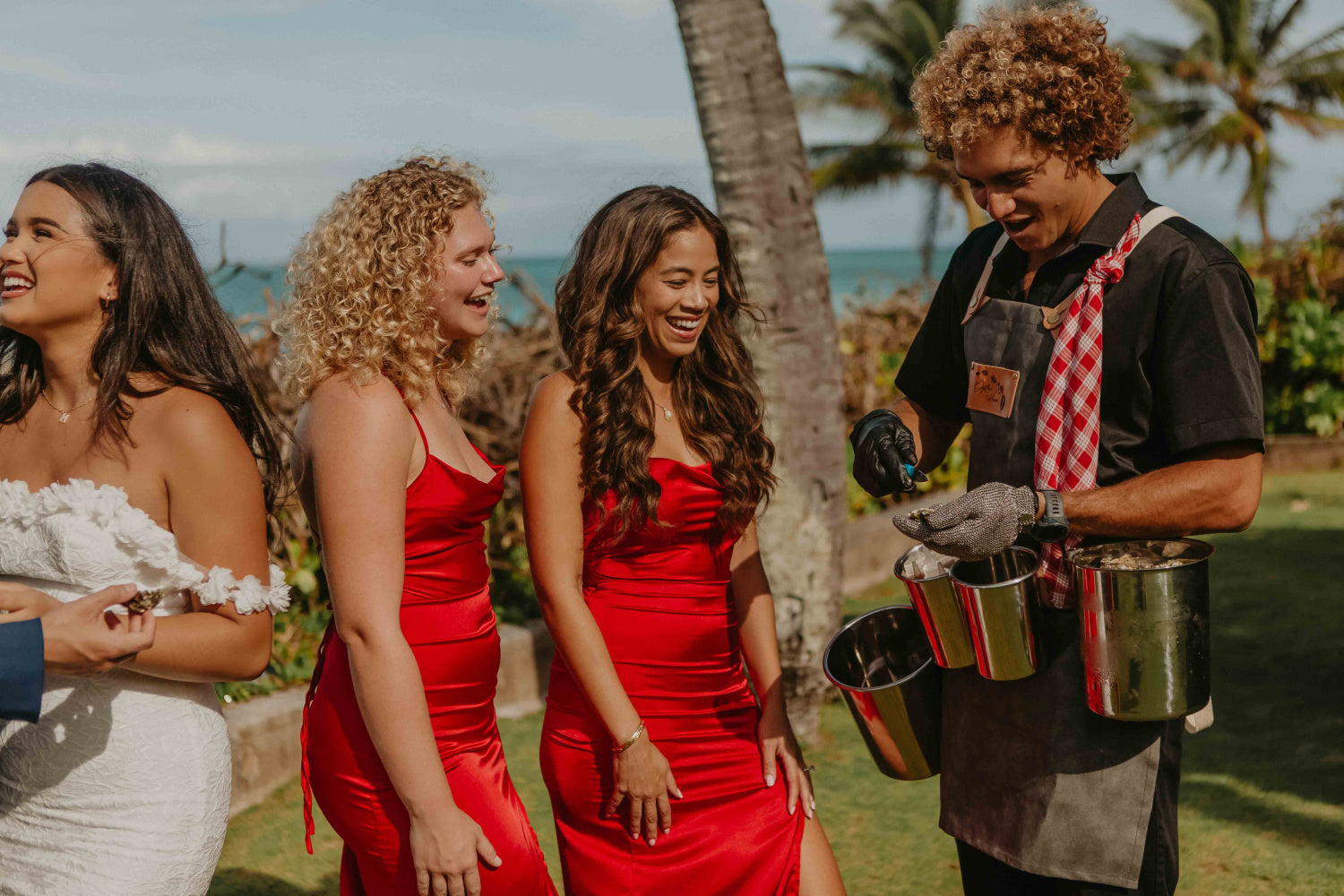
Founded by Allison Chu and the late Hopena Pokipala, and later grown alongside Julie Fieman, Oysters Hawaiʻi is the state’s first and only luxury mobile oyster and caviar catering company. The premise is simple: live shucking, elevated presentation, and the kind of warm, unhurried hospitality that feels distinctly of this place. The execution has taken them from private events on Oʻahu to VIP suites at Allegiant Stadium in Las Vegas — and to the Super Bowl.
What happened in between is a story about resilience, grief, and a smoked ponzu sauce that refuses to be ordinary.
Our brand blends elevated service with local roots, from the way we interact with guests to the ingredients we use.


The Idea Nobody Else Had
Oyster culture in Hawaiʻi is not a given. The islands don’t have the centuries-old shucking tradition of the Chesapeake or the Pacific Northwest. What they have is something arguably more powerful: a hospitality instinct, a love of gathering, and an openness to experience that makes guests receptive to something new.
That was the insight at the heart of Oysters Hawaiʻi — that there was a gap in the market, and that filling it with something luxurious and interactive and unmistakably local could create something people had never seen here before. Allison Chu and Hopena Pokipala saw it first. They built the concept from scratch, rooted it in aloha, and made it work.
“We are currently the first and only company in the islands offering a luxury mobile oyster and caviar catering experience alongside our signature smoked ponzu sauce,” says Julie Fieman, co-owner and COO. “Our brand blends elevated service with local roots, from the way we interact with guests to the ingredients we use.”
Launching Into a Pandemic
The timing, to put it gently, was not ideal. Oysters Hawaiʻi launched right before COVID-19 shut down the events industry entirely. No gatherings. No catering. No path forward that looked anything like the plan.
“We launched right before the pandemic, which forced us to pause and completely rethink how to grow the business during uncertain times,” Fieman says. What followed was a period of adaptation — staying nimble, staying connected, and waiting for the moment when people could gather again.
When that moment came, Oysters Hawaiʻi was ready. Within the first six months of operating, the company secured a contract with the Las Vegas Raiders at Allegiant Stadium — becoming the official oyster and caviar caterer for the VIP suites at all home games. Then came Super Bowl 2024.
“We have many proud moments,” Fieman says, “but one of our proudest moments was securing a contract with the Raiders at Allegiant Stadium within our first six months of starting our company.”


The Loss That Reshaped Everything
The hardest part of the Oysters Hawaiʻi story is also the most important one to tell. Hopena Pokipala, co-founder and a Native Hawaiian whose perspective shaped the soul of the company, passed away. His loss hit the team deeply — not just personally, but directionally. The business he helped build had to find a way to continue without him.
“More recently, we experienced the loss of our co-founder, Hopena, which deeply impacted both our team and our direction,” Fieman says. “Through those challenges, we learned how to adapt, lean on each other, and keep moving forward with purpose.”
His influence remains present in everything the company does. It was Hopena who brought an authentic Native Hawaiian perspective to the way Oysters Hawaiʻi serves and connects with guests. And it is his vision — a long-term goal of restoring Hawaiʻi’s historic oyster beds so the company can one day source locally — that continues to guide the company’s future.
A Family Business, in Every Sense
What keeps Fieman grounded isn’t a system or a strategy. It’s her sister. Oysters Hawaiʻi is a family business in the most literal sense — built alongside a sibling, shaped by shared values, and anchored in the kind of trust that only comes from people who knew each other before the business existed.
“Building this business alongside my sister makes it deeply personal,” she says, “and every decision we make is rooted in supporting one another and staying true to our values. We are also constantly guided by the memory of Hopena, whose vision and passion helped shape Oysters Hawaiʻi.”
That personal foundation shows in how the company operates. It’s woman-owned, locally rooted, and deliberately community-minded — focused not just on growth, but on what kind of presence it wants to have in the place that made it.


The Sauce That Tells the Story
Every great food company eventually produces the one thing that distills everything it stands for into a single product. For Oysters Hawaiʻi, that thing is the smoked ponzu sauce.
Made from local ingredients, developed collaboratively, and designed to pair with oysters while being versatile enough for everyday use, it is — in Fieman’s words — something they created together from scratch that truly represents the brand. It brings a unique, elevated twist to a classic sauce, using local flavors that reflect Hawaiʻi. It’s also the product with the clearest path to scale: the vision is to have it carried in supermarkets across the islands.
“It’s something we created together from scratch and truly represents our brand,” Fieman says. “It brings a unique, elevated twist to a classic sauce, using local ingredients and flavors that reflect Hawaiʻi.”
Building Beyond the Islands
Geographic isolation is one of the defining challenges of any Hawaiʻi business. Higher shipping costs, a smaller local market, and the logistical complexity of expanding to the mainland all compound in ways that mainland competitors simply don’t face. Oysters Hawaiʻi has navigated this by being intentional about where it grows and how.
The West Coast is already in their sights. Building local teams on each island is part of the operational plan. And the Raiders contract proved that the brand travels — that the combination of luxury presentation, Hawaiian hospitality, and a genuinely distinctive product can hold its own anywhere.
“Growing a business from Hawaiʻi comes with unique challenges,” Fieman acknowledges. “But these challenges have pushed us to be resourceful, adaptable, and intentional in building a brand that can successfully operate both locally and on the mainland.”
What It Means to Build Here
For Fieman, building a business in Hawaiʻi is never purely a commercial act. It is an act of representation — of showing up for the community that shaped you, and of making sure that as the business grows, it takes something of that community with it.
“Building a business in Hawaiʻi means creating something that gives back to the community that supports us,” she says. “Beyond profit, it’s about fostering connection, creating meaningful job opportunities, and representing Hawaiʻi with integrity as we grow beyond the islands.”
Her advice to founders considering the same path is characteristically direct: “If you have a dream, go after it with everything you have. Build it with love, stay committed through the challenges, and create something that represents Hawaiʻi in a way you’re proud of.”